Pickleball's Growth and the Olympics

If you've recently picked up a paddle or watched pickleball's explosive growth, you may be wondering: Is pickleball an Olympic sport?

The short answer is no—not yet.

As of 2026, pickleball is not included in the Olympic Games, and it is not part of the Los Angeles 2028 Olympic program. However, the sport is becoming increasingly organized on the international stage, and efforts are underway to pursue recognition from the International Olympic Committee (IOC).

So, could pickleball eventually become an Olympic sport? The possibility is real, but there are still important steps to complete before that can happen.

Is Pickleball an Olympic Sport Right Now?

No. Pickleball is not currently an Olympic sport.

It has grown from a recreational game into an increasingly international competitive sport, but it has not yet received the IOC recognition needed to become part of the Olympic program.

The distinction is important: being popular around the world does not automatically make a sport Olympic. A sport must meet the requirements for recognition and then go through the Olympic program selection process.

For now, pickleball remains outside the Olympic Games.

Will Pickleball Be in the 2028 Olympics?

No. Pickleball will not be part of the 2028 Los Angeles Olympics (LA28).

The IOC approved five additional sports for LA28:

  • Baseball/softball

  • Cricket (T20)

  • Flag football

  • Lacrosse (sixes)

  • Squash

Pickleball was not included in that group. citeturn0search4

This means fans should not expect to see Olympic pickleball competition in Los Angeles in 2028.

What About Breaking?

Breaking is another point of confusion. Breaking made its Olympic debut at the Paris 2024 Olympic Games, but it is not part of the LA28 sports program. It therefore should not be described as a new sport being added to the 2028 Olympics. citeturn0search4

Why Isn't Pickleball in the Olympics Yet?

Popularity is only one part of the Olympic equation.

For a sport to have a realistic path toward Olympic inclusion, it needs strong international organization, widespread participation, internationally standardized competition, appropriate governance, and compliance with Olympic and anti-doping standards.

Pickleball has made progress in several of these areas, but its international Olympic pathway is still developing.

One important step is having a strong international governing structure capable of representing the sport globally.

Pickleball's Path Toward Olympic Recognition

The sport's international governing structure has been developing in recent years.

The Global Pickleball Federation (GPF) says it began the process of seeking IOC recognition and has been working with stakeholders in international sport toward that goal. The organization has also stated that it wants to create a pathway for pickleball to eventually reach the Olympic Games. citeturn1search0turn1search2

That is an important development, but it does not mean the IOC has officially recognized pickleball or selected it for a future Olympic Games.

Those are separate steps.

The GPF has specifically identified Brisbane 2032 as a long-term target for Olympic inclusion. However, this is the federation's goal—not a confirmed Olympic decision or guarantee from the IOC. citeturn1search1

What Does Pickleball Need to Do to Reach the Olympics?

Several areas will be important as pickleball continues pursuing Olympic recognition.

1. Build a Strong International Federation

A sport needs effective international governance. That includes clear leadership, transparent rules, democratic processes, and an organization capable of representing national federations around the world.

The Global Pickleball Federation says its work is focused on building that international structure. citeturn1search1

2. Expand International Participation

Pickleball's strongest market has historically been the United States, but the sport continues to expand internationally.

For Olympic consideration, sustained participation and organized competition across many countries are important. More national federations and international events can strengthen the sport's case.

3. Establish Strong International Competition

Olympic sports need more than recreational participation.

Pickleball needs a strong international competitive structure, including national teams, international tournaments, standardized rules, and high-level athletes competing across countries.

The continued development of global competitions can help demonstrate that pickleball is a genuine international competitive sport.

4. Follow Anti-Doping and Sports Governance Standards

Olympic sports operate under strict governance and anti-doping frameworks.

The Global Pickleball Federation has identified compliance with World Anti-Doping Agency (WADA) standards, recognition of the Court of Arbitration for Sport (CAS), and other governance requirements as important parts of the Olympic pathway. citeturn1search1

Why Pickleball Could Be a Good Fit for the Olympics

Pickleball has several characteristics that could make it attractive as an international sport.

It is relatively easy to learn, requires less space than many traditional court sports, and can be played by people across a wide range of ages and skill levels.

The sport also has a fast pace that can translate well to competitive viewing.

But these advantages alone aren't enough to secure Olympic status. The sport must continue demonstrating that it has a sustainable international competitive structure.

As pickleball continues to grow beyond the court, fans are also embracing pickleball-themed apparel, including our Halloween pickleball shirts

How Does Pickleball Compare With Other New Olympic Sports?

Pickleball isn't the only sport that has had to build its international profile before reaching the Olympics.

Sports such as skateboarding, surfing, and sport climbing successfully entered the Olympic program, while flag football and squash are scheduled to make their Olympic debuts at LA28. citeturn0search4

However, each sport follows its own path. Pickleball cannot simply follow the same timeline as another sport because Olympic inclusion depends on factors such as international governance, participation, competition structure, and decisions made by the IOC and relevant Olympic organizers.

Could Pickleball Be in the 2032 Olympics?

It is possible, but it is not confirmed.

The Global Pickleball Federation has publicly identified the Brisbane 2032 Olympic Games as a goal for the sport. citeturn1search1

That does not mean pickleball has been selected for Brisbane 2032.

The sport would first need to make further progress toward IOC recognition and satisfy the relevant requirements. The Olympic program for future Games is also subject to decisions by the IOC and the organizing process for each edition.

So, for now, 2032 should be viewed as a target being pursued by pickleball's international governing community, rather than a confirmed destination.

The Future of Pickleball and the Olympics

Pickleball has come a long way, but its Olympic journey is still in progress.

The sport is becoming more international, its governing organizations are working toward stronger global coordination, and the Global Pickleball Federation has begun pursuing the IOC recognition process. citeturn1search0turn1search2

Still, there is no official confirmation that pickleball will become an Olympic sport in 2032 or any other future Games.

For pickleball fans, the next few years could be important. Continued international growth, stronger governance, global competitions, and Olympic recognition efforts will determine how close the sport gets to the world's biggest sporting stage.

Frequently Asked Questions

Will pickleball ever become an Olympic sport?

It is possible, but there is no guarantee. Pickleball is not currently an Olympic sport, and the IOC has not confirmed it for a future Olympic Games. International pickleball organizations are working toward IOC recognition and eventual Olympic inclusion.

Will pickleball be in the 2028 Olympics?

No. Pickleball is not included in the Los Angeles 2028 Olympic program. The five additional sports approved for LA28 are baseball/softball, cricket (T20), flag football, lacrosse (sixes), and squash. citeturn0search4

Could pickleball be in the 2032 Olympics?

Possibly, but it has not been confirmed. The Global Pickleball Federation has identified Brisbane 2032 as a goal for pickleball's Olympic pathway. citeturn1search1

Does the IOC recognize pickleball?

Pickleball does not currently have confirmed IOC-recognized Olympic sport status. The Global Pickleball Federation says it has begun the process of pursuing IOC recognition. citeturn1search0turn1search2

What sports are new for the 2028 Olympics?

The IOC approved baseball/softball, cricket (T20), flag football, lacrosse (sixes), and squash as additional sports for Los Angeles 2028. Flag football and squash will make their Olympic debuts at LA28. citeturn0search4

Conclusion

So, is pickleball an Olympic sport? Not yet.

Pickleball will not appear at the 2028 Los Angeles Olympics, but the sport's international Olympic campaign is continuing. The Global Pickleball Federation is pursuing IOC recognition and has set Brisbane 2032 as an aspirational target.

Whether pickleball eventually earns a place in the Olympic Games will depend on its continued international growth, governance, competition structure, and the decisions of the Olympic authorities.

For now, pickleball's Olympic dream remains a work in progress—but the sport is certainly moving in that direction.
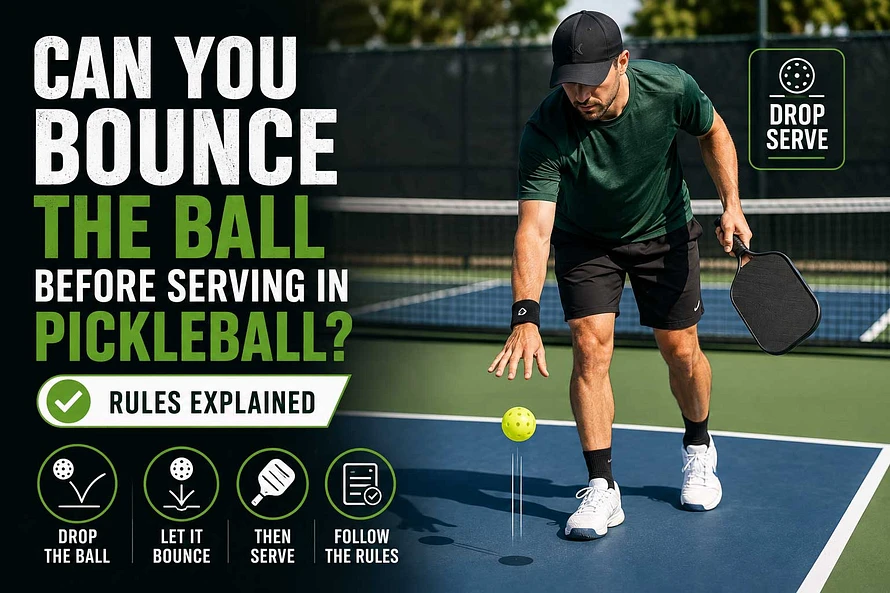
Can You Bounce the Ball Before Serving in Pickleball

Are you wondering if you can bounce the ball before serving in pickleball? This question trips up many players, especially those new to the game or looking to improve their serve.

Knowing the answer could give you a quick edge and make your serve more consistent. You’ll discover exactly how bouncing the ball on a serve works, whether it’s allowed, and what rules you need to follow. Stick around, because mastering this simple technique might just be the secret to raising your pickleball game faster than you think!

Pickleball Serve Types

Understanding the different serve types in pickleball can give you a real edge on the court. Each serve style has its own rules and strategic benefits, and knowing how to use them effectively can change the way you play. Let’s break down the two main serve types you’ll encounter: the volley serve and the drop serve.

Volley Serve Basics

The volley serve in pickleball means hitting the ball out of the air without letting it bounce first. You must strike the ball below your waist and keep your paddle below the wrist at the moment of contact. This serve is quick and puts immediate pressure on your opponent.

One thing I’ve noticed playing with beginners is that they often try to smash the volley serve, but this can lead to errors. Instead, focus on control and placement. Can you aim for your opponent’s backhand side to gain an advantage right away?

Drop Serve Explained

The drop serve lets you bounce the ball before hitting it, which some players find easier to control. You simply drop the ball from your hand and let it hit the ground, then strike it after the bounce. This serve is legal and can be a great option if you struggle with timing a volley serve.

Remember, when you perform a drop serve, you cannot throw or spin the ball — it must fall naturally by gravity. Unlike the volley serve, there are no restrictions on paddle height or swing arc after the bounce.

In my experience, the drop serve is perfect when you want to slow the game down and force your opponent to react. Have you tried both serves in a match? Which one feels more natural to your style of play?

Can You Bounce the Ball on a Serve in Pickleball: Essential Rules Explained

Credit: www.youtube.com

Rules For Bouncing The Ball

Bouncing the ball during a serve in pickleball follows clear rules. These rules ensure fair play and consistency. Understanding them helps players serve legally and avoid faults.

The rules focus on how the ball is dropped, bounced, and struck. Each part has specific guidelines players must follow. Below are the key regulations on bouncing the ball before a serve.

Legal Bounce Serve Conditions

The ball must be dropped from the hand or paddle face without any added force. This is called a drop serve. Players can let the ball bounce once or multiple times before hitting it. The bounce must be natural, caused by gravity only. No throwing or pushing the ball down to create a bounce.

Restrictions On Ball Drop

The ball cannot be thrown or spun with fingers when released. It must fall freely to the ground. Spinning the ball or tossing it incorrectly makes the serve illegal. The ball must start from a stationary position in the hand or on the paddle face. Any movement to gain an advantage breaks the rules.

Paddle And Swing Regulations

After the ball bounces, players can swing the paddle freely. There is no height restriction on the paddle during the serve swing. The ball must be struck below the waist level at contact. The paddle must move in a smooth arc to hit the ball. Hitting the ball out of the air without a bounce is a different serve type.

Executing A Drop Serve

Executing a drop serve in pickleball involves dropping the ball and letting it bounce before hitting it. This serve style adds control and consistency to your serve. Players often use it to start the game with more accuracy. Understanding how to perform this serve correctly can improve your play and reduce faults.

Proper Ball Release Techniques

Hold the ball firmly in your hand. Drop it gently without adding spin or force. Let gravity do the work. Avoid pushing or tossing the ball down. The ball must fall naturally. Keep your paddle ready to strike after the bounce. Timing is key to hitting the ball cleanly.

Allowed Bounce Counts

The ball can bounce one or more times before contact. There is no limit to how many times it bounces. Use the bounce to improve your timing and control. Make sure to hit the ball before it stops moving. This flexibility helps players adjust the serve to their comfort.

Common Mistakes To Avoid

Do not throw or push the ball downward. Avoid adding spin with your fingers during the drop. Make sure the ball drops freely by gravity. Do not hit the ball before it bounces. Avoid hitting the ball too late after multiple bounces. These mistakes can cause faults and lost points.

Advantages And Drawbacks

Bouncing the ball on a serve in pickleball has both advantages and drawbacks. This technique, known as a drop serve, allows players to start the serve with the ball touching the ground first. It changes the pace and style of the serve, offering unique benefits and some challenges. Understanding these can help players decide when to use a bounce serve.

Benefits Of Bounce Serves

Bouncing the ball before serving gives better control over the shot. Players can time their swing more accurately. It reduces the chance of faults caused by bad tosses. The ball’s slower speed after the bounce can confuse opponents. It also allows for more spin and placement options. Beginners find it easier to serve with a bounce. This method helps develop consistency and confidence in the serve.

Challenges At Higher Levels

At advanced levels, bounce serves can be less effective. Opponents expect slower serves and prepare accordingly. It may give them extra time to react and return the ball. Skilled players can use the bounce as a cue to anticipate serve type. Drop serves require precise timing, which can be tough under pressure. In fast-paced matches, volley serves might be preferred for speed. Some players find bounce serves too predictable in competitive play.

Serve Strategies For Beginners

Starting with serve strategies can boost your pickleball skills quickly. Serving well sets the tone for each point. Beginners often find it tricky to decide how to serve. Simple strategies help build confidence and control. Focus on learning basic serves before trying complex shots.

If you’re looking for fun pickleball apparel to wear on or off the court, check out our Halloween pickleball shirts collection 

Choosing Between Drop And Volley Serves

Pickleball offers two main serve types: drop serve and volley serve. A drop serve involves dropping the ball and letting it bounce before hitting. It allows more time to prepare your shot. A volley serve requires hitting the ball directly out of the air. It can surprise your opponent with speed. Beginners usually find drop serves easier to control. Try both types during practice to see which fits your style better.

Improving Serve Consistency

Consistent serves increase your chances of winning points. Start by practicing a smooth and steady motion. Keep your grip relaxed to avoid tension. Focus on hitting the ball at the same spot each time. Use a target on the court to guide your serve. Repetition builds muscle memory and confidence. Avoid rushing your serve; take a calm and steady approach.

Common Misconceptions

Many players are unsure about bouncing the ball during a pickleball serve. This confusion leads to common myths and misunderstandings. Clearing these up helps players serve correctly and avoid penalties. Understanding the true rules also improves confidence and gameplay.

Myths About Bounce Serves

Some believe you cannot let the ball hit the ground before serving. Others think bouncing the ball breaks the rules. Many say the ball must be hit out of the air only. These are not true. Bouncing the ball before hitting it is allowed in pickleball.

Another myth claims bouncing the ball gives an unfair advantage. This idea comes from watching other sports where serves must be hit directly. In pickleball, a bounce serve or drop serve is legal and common. Players can bounce the ball as many times as they want before hitting the serve.

Clarifying Official Rules

The official pickleball rules permit a drop serve. This means the player drops the ball, lets it bounce, then hits it to serve. The ball must fall by gravity only, no throwing or pushing. Adding spin with your hand while dropping is not allowed.

The paddle may swing freely after the bounce. There is no limit on paddle height or swing arc during a drop serve. This differs from a volley serve, where the ball is hit in the air without bouncing. Both serve styles are legal and accepted in pickleball matches.

Knowing these rules helps players avoid faults. It also removes confusion about what is legal. Bouncing the ball on a serve is a valid technique and can be useful for control. Players should practice drop serves to find what works best for them.

Frequently Asked Questions

What Is An Illegal Serve In Pickleball?

An illegal serve in pickleball occurs if the paddle contacts the ball above the waist, the serve lands outside the correct court, or the server steps on or over the baseline before hitting. Also, throwing the ball instead of dropping it violates the rules.

What Is A Dirty Nelson In Pickleball?

A dirty nelson in pickleball is an illegal move where a player traps an opponent’s arm or paddle during play.

What Is The New Serve Rule In Pickleball?

The new pickleball serve rule allows a drop serve, where you drop the ball to bounce before hitting it. No throwing or added spin is allowed. Paddle height and swing arc restrictions do not apply after the drop. You can bounce the ball multiple times before striking it.

What Is The Golden Rule Pickleball?

The golden rule in pickleball requires the serve to be made underhand, paddle below the waist, and ball struck before it bounces.

Conclusion

Bouncing the ball before a serve in pickleball is allowed. This move is called a drop serve. You simply drop the ball and let it bounce naturally before hitting it. If you're also looking to bring some personality to the court, explore our Halloween pickleball shirts for seasonal pickleball apparel. 

This serve style offers flexibility but may take practice to master. Understanding this rule helps you serve legally and confidently. Try both drop and volley serves to find what fits your play. Keep practicing and enjoy the game!