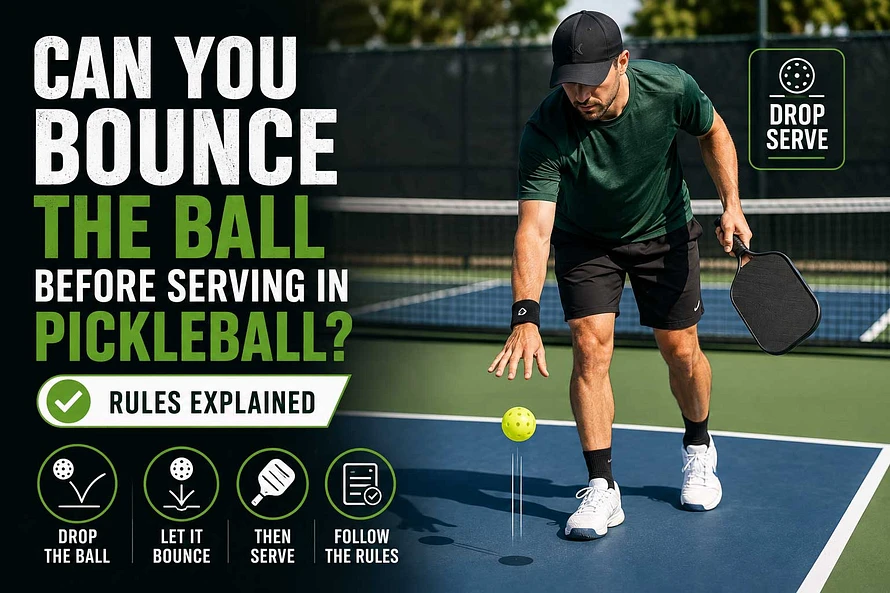
Are you wondering if you can bounce the ball before serving in pickleball? This question trips up many players, especially those new to the game or looking to improve their serve.
Knowing the answer could give you a quick edge and make your serve more consistent. You’ll discover exactly how bouncing the ball on a serve works, whether it’s allowed, and what rules you need to follow. Stick around, because mastering this simple technique might just be the secret to raising your pickleball game faster than you think!
Pickleball Serve Types
Understanding the different serve types in pickleball can give you a real edge on the court. Each serve style has its own rules and strategic benefits, and knowing how to use them effectively can change the way you play. Let’s break down the two main serve types you’ll encounter: the volley serve and the drop serve.
Volley Serve Basics
The volley serve in pickleball means hitting the ball out of the air without letting it bounce first. You must strike the ball below your waist and keep your paddle below the wrist at the moment of contact. This serve is quick and puts immediate pressure on your opponent.
One thing I’ve noticed playing with beginners is that they often try to smash the volley serve, but this can lead to errors. Instead, focus on control and placement. Can you aim for your opponent’s backhand side to gain an advantage right away?
Drop Serve Explained
The drop serve lets you bounce the ball before hitting it, which some players find easier to control. You simply drop the ball from your hand and let it hit the ground, then strike it after the bounce. This serve is legal and can be a great option if you struggle with timing a volley serve.
Remember, when you perform a drop serve, you cannot throw or spin the ball — it must fall naturally by gravity. Unlike the volley serve, there are no restrictions on paddle height or swing arc after the bounce.
In my experience, the drop serve is perfect when you want to slow the game down and force your opponent to react. Have you tried both serves in a match? Which one feels more natural to your style of play?

Credit: www.youtube.com
Rules For Bouncing The Ball
Bouncing the ball during a serve in pickleball follows clear rules. These rules ensure fair play and consistency. Understanding them helps players serve legally and avoid faults.
The rules focus on how the ball is dropped, bounced, and struck. Each part has specific guidelines players must follow. Below are the key regulations on bouncing the ball before a serve.
Legal Bounce Serve Conditions
The ball must be dropped from the hand or paddle face without any added force. This is called a drop serve. Players can let the ball bounce once or multiple times before hitting it. The bounce must be natural, caused by gravity only. No throwing or pushing the ball down to create a bounce.
Restrictions On Ball Drop
The ball cannot be thrown or spun with fingers when released. It must fall freely to the ground. Spinning the ball or tossing it incorrectly makes the serve illegal. The ball must start from a stationary position in the hand or on the paddle face. Any movement to gain an advantage breaks the rules.
Paddle And Swing Regulations
After the ball bounces, players can swing the paddle freely. There is no height restriction on the paddle during the serve swing. The ball must be struck below the waist level at contact. The paddle must move in a smooth arc to hit the ball. Hitting the ball out of the air without a bounce is a different serve type.
Executing A Drop Serve
Executing a drop serve in pickleball involves dropping the ball and letting it bounce before hitting it. This serve style adds control and consistency to your serve. Players often use it to start the game with more accuracy. Understanding how to perform this serve correctly can improve your play and reduce faults.
Proper Ball Release Techniques
Hold the ball firmly in your hand. Drop it gently without adding spin or force. Let gravity do the work. Avoid pushing or tossing the ball down. The ball must fall naturally. Keep your paddle ready to strike after the bounce. Timing is key to hitting the ball cleanly.
Allowed Bounce Counts
The ball can bounce one or more times before contact. There is no limit to how many times it bounces. Use the bounce to improve your timing and control. Make sure to hit the ball before it stops moving. This flexibility helps players adjust the serve to their comfort.
Common Mistakes To Avoid
Do not throw or push the ball downward. Avoid adding spin with your fingers during the drop. Make sure the ball drops freely by gravity. Do not hit the ball before it bounces. Avoid hitting the ball too late after multiple bounces. These mistakes can cause faults and lost points.
Advantages And Drawbacks
Bouncing the ball on a serve in pickleball has both advantages and drawbacks. This technique, known as a drop serve, allows players to start the serve with the ball touching the ground first. It changes the pace and style of the serve, offering unique benefits and some challenges. Understanding these can help players decide when to use a bounce serve.
Benefits Of Bounce Serves
Bouncing the ball before serving gives better control over the shot. Players can time their swing more accurately. It reduces the chance of faults caused by bad tosses. The ball’s slower speed after the bounce can confuse opponents. It also allows for more spin and placement options. Beginners find it easier to serve with a bounce. This method helps develop consistency and confidence in the serve.
Challenges At Higher Levels
At advanced levels, bounce serves can be less effective. Opponents expect slower serves and prepare accordingly. It may give them extra time to react and return the ball. Skilled players can use the bounce as a cue to anticipate serve type. Drop serves require precise timing, which can be tough under pressure. In fast-paced matches, volley serves might be preferred for speed. Some players find bounce serves too predictable in competitive play.
Serve Strategies For Beginners
Starting with serve strategies can boost your pickleball skills quickly. Serving well sets the tone for each point. Beginners often find it tricky to decide how to serve. Simple strategies help build confidence and control. Focus on learning basic serves before trying complex shots.
If you’re looking for fun pickleball apparel to wear on or off the court, check out our Halloween pickleball shirts collection
Choosing Between Drop And Volley Serves
Pickleball offers two main serve types: drop serve and volley serve. A drop serve involves dropping the ball and letting it bounce before hitting. It allows more time to prepare your shot. A volley serve requires hitting the ball directly out of the air. It can surprise your opponent with speed. Beginners usually find drop serves easier to control. Try both types during practice to see which fits your style better.
Improving Serve Consistency
Consistent serves increase your chances of winning points. Start by practicing a smooth and steady motion. Keep your grip relaxed to avoid tension. Focus on hitting the ball at the same spot each time. Use a target on the court to guide your serve. Repetition builds muscle memory and confidence. Avoid rushing your serve; take a calm and steady approach.
Common Misconceptions
Many players are unsure about bouncing the ball during a pickleball serve. This confusion leads to common myths and misunderstandings. Clearing these up helps players serve correctly and avoid penalties. Understanding the true rules also improves confidence and gameplay.
Myths About Bounce Serves
Some believe you cannot let the ball hit the ground before serving. Others think bouncing the ball breaks the rules. Many say the ball must be hit out of the air only. These are not true. Bouncing the ball before hitting it is allowed in pickleball.
Another myth claims bouncing the ball gives an unfair advantage. This idea comes from watching other sports where serves must be hit directly. In pickleball, a bounce serve or drop serve is legal and common. Players can bounce the ball as many times as they want before hitting the serve.
Clarifying Official Rules
The official pickleball rules permit a drop serve. This means the player drops the ball, lets it bounce, then hits it to serve. The ball must fall by gravity only, no throwing or pushing. Adding spin with your hand while dropping is not allowed.
The paddle may swing freely after the bounce. There is no limit on paddle height or swing arc during a drop serve. This differs from a volley serve, where the ball is hit in the air without bouncing. Both serve styles are legal and accepted in pickleball matches.
Knowing these rules helps players avoid faults. It also removes confusion about what is legal. Bouncing the ball on a serve is a valid technique and can be useful for control. Players should practice drop serves to find what works best for them.
Frequently Asked Questions
What Is An Illegal Serve In Pickleball?
An illegal serve in pickleball occurs if the paddle contacts the ball above the waist, the serve lands outside the correct court, or the server steps on or over the baseline before hitting. Also, throwing the ball instead of dropping it violates the rules.
What Is A Dirty Nelson In Pickleball?
A dirty nelson in pickleball is an illegal move where a player traps an opponent’s arm or paddle during play.
What Is The New Serve Rule In Pickleball?
The new pickleball serve rule allows a drop serve, where you drop the ball to bounce before hitting it. No throwing or added spin is allowed. Paddle height and swing arc restrictions do not apply after the drop. You can bounce the ball multiple times before striking it.
What Is The Golden Rule Pickleball?
The golden rule in pickleball requires the serve to be made underhand, paddle below the waist, and ball struck before it bounces.
Conclusion
Bouncing the ball before a serve in pickleball is allowed. This move is called a drop serve. You simply drop the ball and let it bounce naturally before hitting it. If you're also looking to bring some personality to the court, explore our Halloween pickleball shirts for seasonal pickleball apparel.
This serve style offers flexibility but may take practice to master. Understanding this rule helps you serve legally and confidently. Try both drop and volley serves to find what fits your play. Keep practicing and enjoy the game!